
Speed and passion, quality first
To accelerate innovation and safeguard qualityOur end-to-end service is a highly collaborative and seamless' highway '
Date:2026-11-16
Short answer: Level 3 in most cases — but the level is set by your customer, not by the standard. If a buyer has not specified a level in writing, assume Level 3, and confirm it before you cut a tool.
The five PPAP levels at a glance
PPAP (Production Part Approval Process) is defined by AIAG. The standard recognises five submission levels, and the difference between them is not the amount of work the supplier does — it is how much evidence gets sent to the customer.
Level What is submitted Typical use
Level 1 Part Submission Warrant (PSW) only. Mature, low-risk parts; customer already trusts the process
Level 2 PSW + limited supporting data. Low-volume or non-safety-critical parts
Level 3 PSW + complete supporting data. Default level. Most common in practice.
Level 4 PSW + customer-defined requirements. Customer specifies a custom package
Level 5 Level 3 package + on-site review at the supplier. High-risk parts; new supplier; safety-critical
Two points that are widely misunderstood: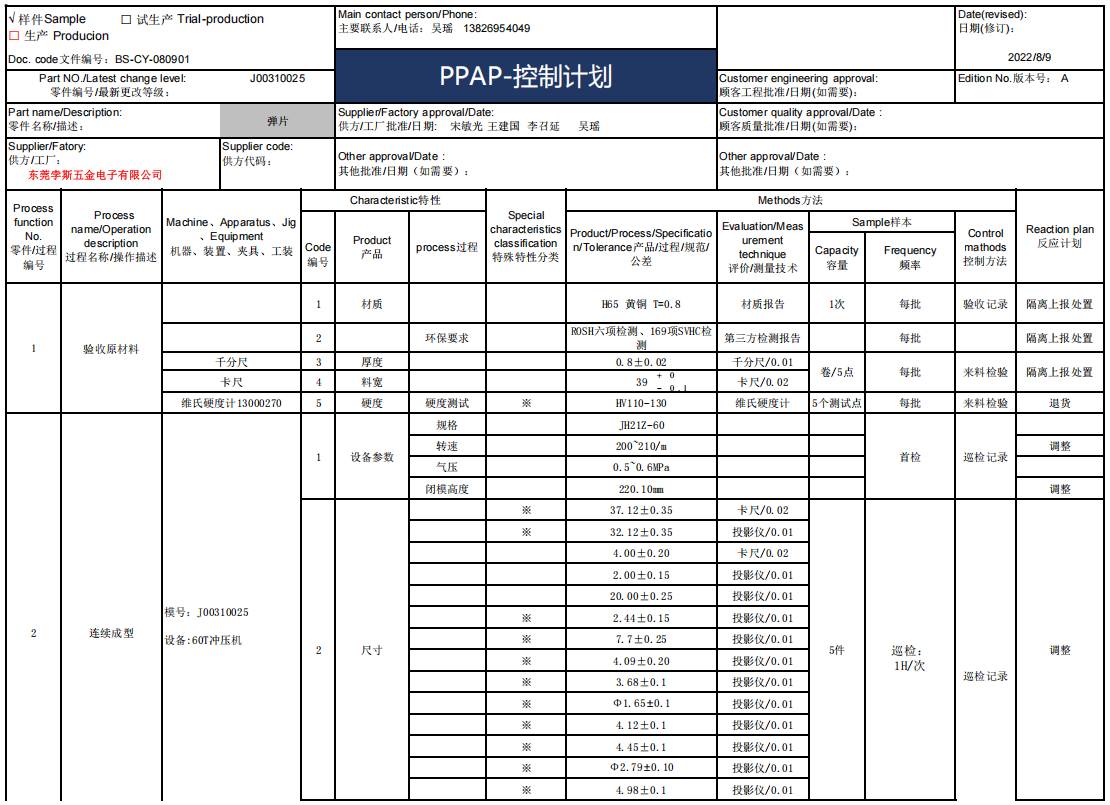
A lower level does not mean less work. The supplier still performs the same validation and retains the records. Level 1 just means the customer does not want to read them.
Level 5 is not "more documents." It adds a physical audit of your facility on top of a Level 3 package.
What actually goes into a Level 3 package
The AIAG PPAP manual lists up to 18 elements. For a stamped part, they group into four practical buckets:
Design and specification records
Design records of the salable product
Engineering change documents, if any
Customer engineering approval, where required
Design FMEA (if the supplier owns design)
Process validation
Process flow diagram
Process FMEA
Control plan
Measurement system analysis (MSA / GR&R)
Dimensional results on all samples
Material and performance test results
Capability and conformity
Initial process studies (Ppk)
Qualified laboratory documentation
Appearance approval report, if the part is cosmetic
Sample production parts
Master sample
Checking aids
Sign-off
Part Submission Warrant (PSW)
Customer-specific requirements
For stamped components, three of these carry disproportionate weight: dimensional results, Ppk on critical characteristics, and the control plan. A buyer reading a Level 3 package for a shield can or terminal will go straight to whether the process is in statistical control on the characteristics that matter — flatness, position tolerance, contact resistance, or plating thickness.
Where stamped-part suppliers usually fail
1. Ppk below the required threshold on a real characteristic A Ppk of 1.67 is the common automotive requirement for a new process on a significant characteristic. Suppliers often present Ppk calculated from a trial run with hand-sorted parts — which does not represent production. Buyers increasingly ask for data from a production run at rate.
2. Control plan that does not match the process flow If the control plan lists an inspection that the flow diagram does not contain, the whole package loses credibility. These two documents are read side by side.
3. Dimensional report without measurement system analysis Reporting flatness at 0.02 mm means nothing if the gauge's GR&R consumes most of the tolerance. On tight stamped features, MSA is not paperwork — it determines whether the dimensional results are real.
4. Material certificates that trace to a different heat number For plated stamped parts, the plating thickness certificate and the base material certificate must both trace to the parts in the sample box.
5. Timing A Level 3 package is due before production parts ship. Suppliers who treat PPAP as post-delivery paperwork put the buyer's launch at risk — and that is the fastest way to lose the account.
What to ask a stamping supplier before issuing a PO
Which PPAP level has this customer historically required for this part family?
Who calculates Ppk — the supplier, or an agreed third party?
Can you provide dimensional results from a production run at rate, not a pilot run?
What is the GR&R on the flatness / position / contact-resistance gauge?
Who signs the PSW, and to which customer-specific requirements?
How BOSI handles PPAP
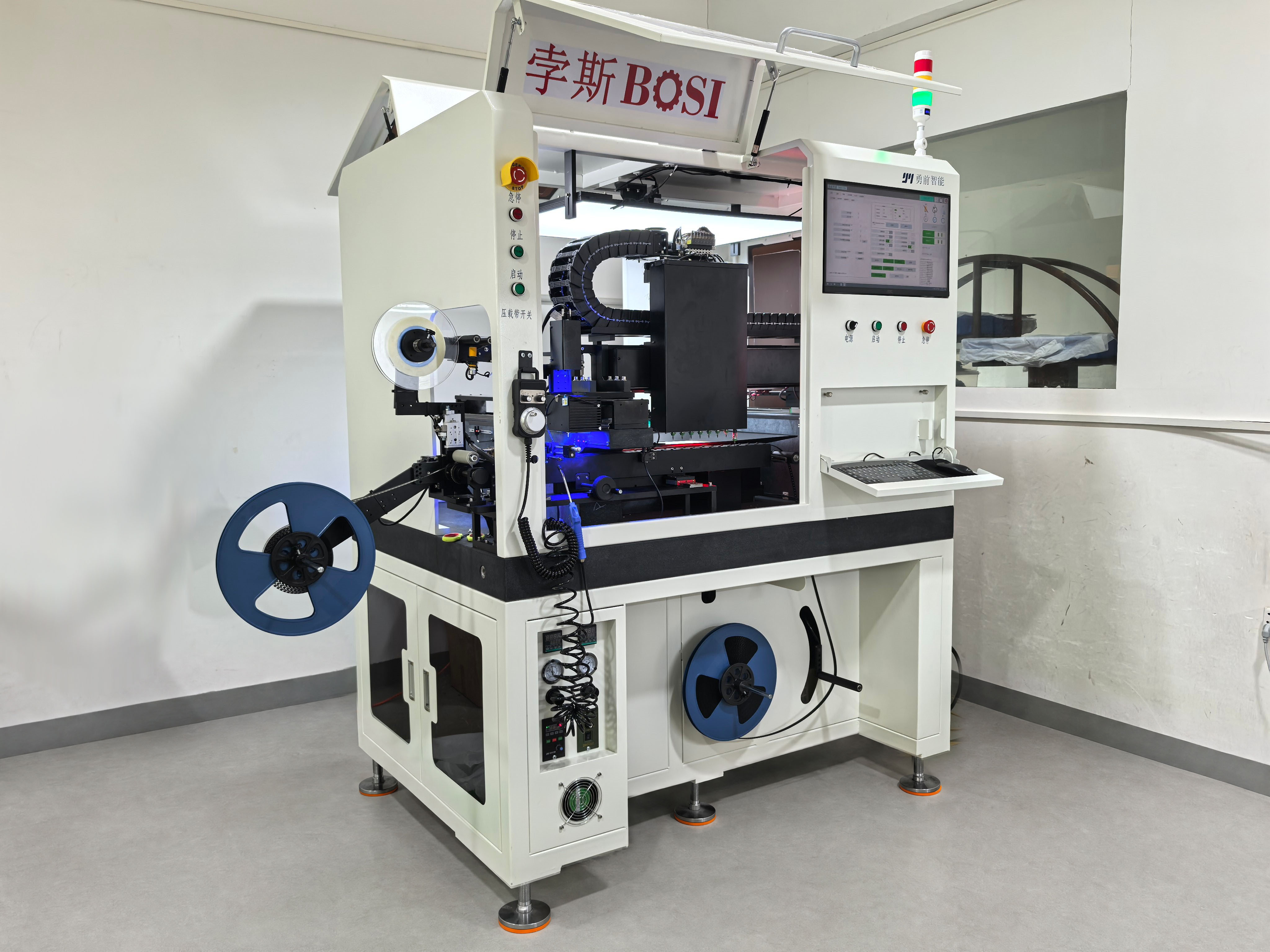
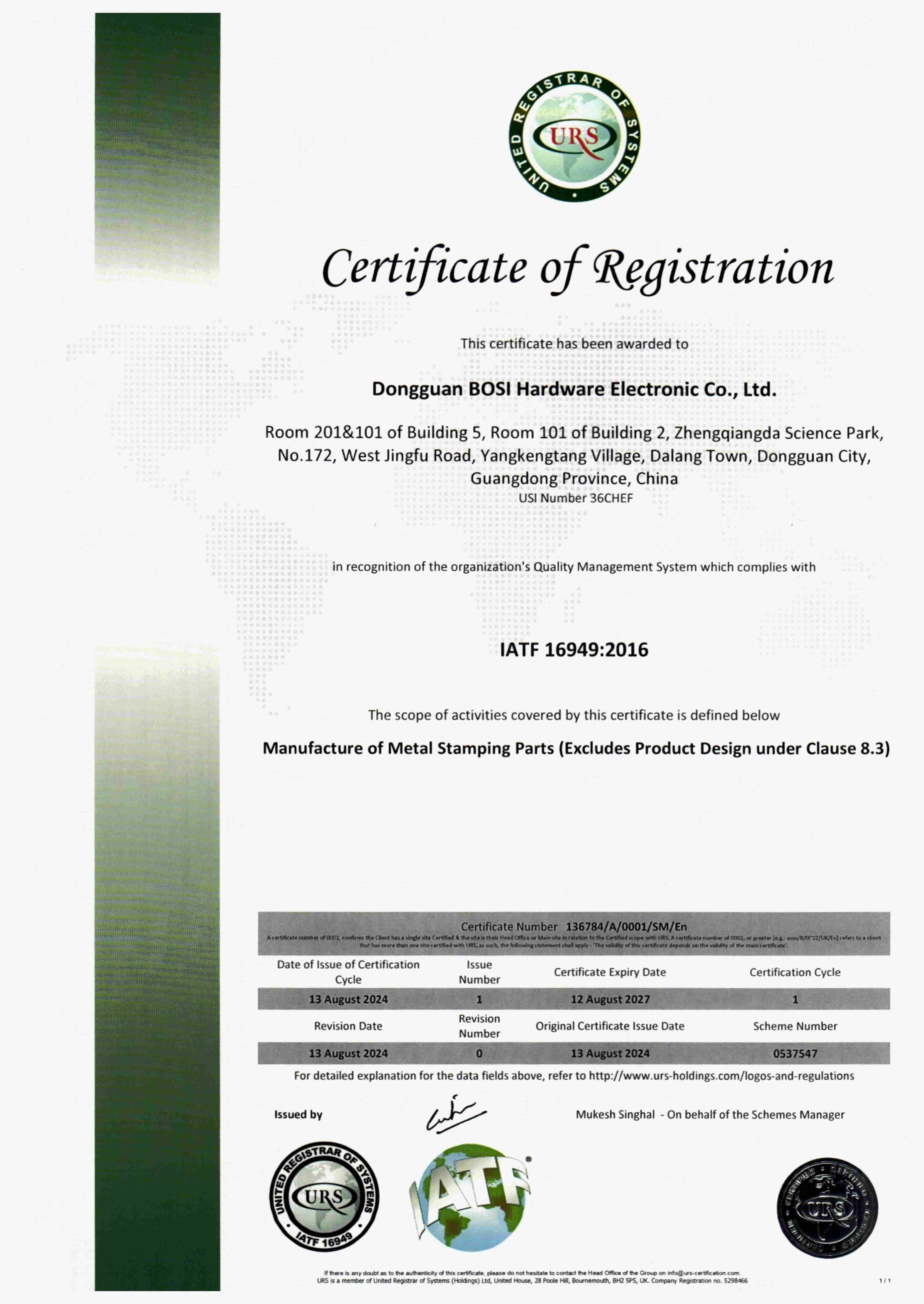
BOSI operates under IATF 16949 for automotive and ISO 13485 for medical programs, with PPAP submission as a standard step in the launch flow rather than an afterthought. Critical characteristics are monitored with in-line vision inspection, so the Ppk reported in a Level 3 package comes from the production process — not from sorted samples.
For stamped parts with micron-level tolerances — flatness 0.02 mm, position tolerance under 0.01 mm — the limiting factor is usually measurement, not the press. That is why process validation and MSA are planned together at the DFM stage.
Need a Level 3 PPAP package quoted for a stamped component? Send your drawing and annual volume → Our engineering team reviews DFM and PPAP scope before tooling is released.


 Language
 Your location:


 Official account
 0769-82928019
 E-mail
